 | ||||||||||||
|
| ||||||||||||
Prednisone Guide: How to Use for Fast Relief & RecoveryUnderstanding Prednisone: What Is It?
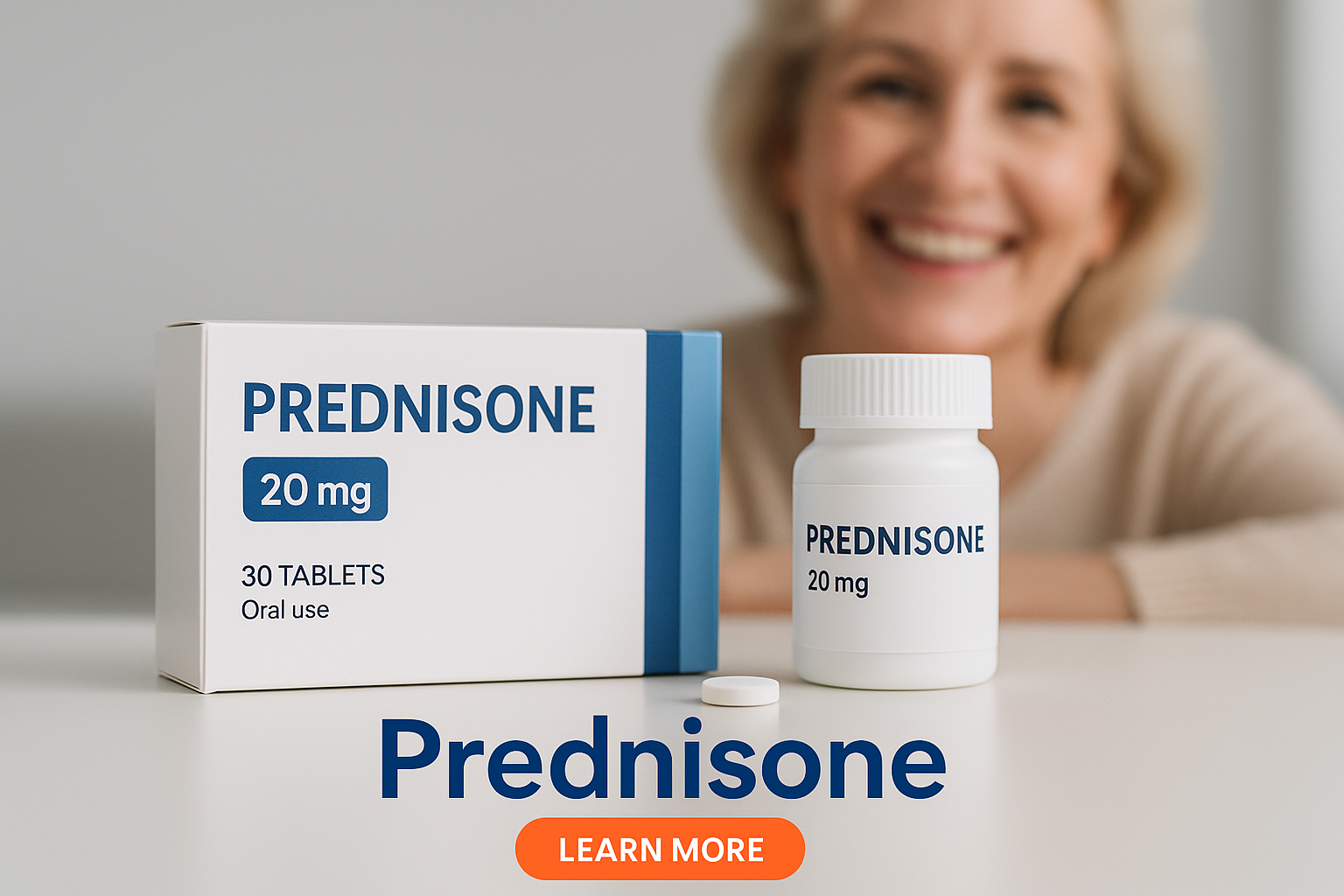
Prednisone is a corticosteroid drug commonly prescribed to reduce inflammation and suppress the immune system. It is widely used in treatments for asthma, allergic disorders, and rheumatoid arthritis. Prednisone works by mimicking natural hormones that regulate immune response and inflammation. The medication is typically available in tablet form, with dosages such as Prednisone 10mg or Prednisone 40mg tailored to the severity of the condition. By influencing the body’s hormonal functions, prednisone acts as a powerful anti-inflammatory agent essential in many medical regimens. Proper Usage: Administering Prednisone
Dosage precision is vital when taking prednisone, adjusting according to the treated condition. Prescriptions may range from low doses for mild symptoms to higher doses for severe cases. Over- or under-dosing can impact treatment effectiveness and side effect risks. Doctors often recommend tapering the dose. Treatment frequently begins with a higher dose that is gradually reduced to minimize adverse effects. Research, such as the Randomized Open-label Trial to Compare Efficacy and Tolerance of Corticosteroids and IVIg, underscores the importance of monitoring and adjusting doses based on patient response.
Regional variations exist, for example, within Prednisone UK products, but dosage principles remain consistent globally. Following prescribed directions is crucial regardless of product provenance. Potential Side Effects and Considerations
Prednisone is highly effective but carries risks of side effects, particularly when used long-term. Possible effects include weight gain, mood fluctuations, and elevated blood sugar levels. Awareness of these risks helps patients manage treatment safely. According to the FDA, "patients should be aware of potential side effects and maintain open communication with their healthcare providers to ensure personalized treatment results are optimized—refer to FDA application docs ANDA089599." Proactive consultation and monitoring enable earlier detection and mitigation of complications. Additional insights are available at itmhca.com, which also compares prednisone with other drugs like doxycycline for inflammation management. Alternatives and Complementary Treatments
Patients who cannot tolerate prednisone due to allergies or other reasons have alternatives. Budesonide, a similar corticosteroid, may offer effective treatment with a different chemical profile. Medical guidance is essential before switching. Complementary options and combination therapies are further explored through resources such as background on Nizagara. Topical formulations and adjusted dosing schedules provide additional flexibility in therapy plans. Consulting healthcare providers remains critical to customizing treatments suited to individual health goals and medical history. Frequently Asked Questions
What is the general advice on dosage modifications when taking prednisone for a chronic condition?Dosage adjustments should be gradual, managed under medical supervision. Tapering reduces withdrawal risks. Avoid non-prescription alternatives, which can cause hidden complications. How do I know if prednisone is the best choice compared to other steroids?Your physician assesses the choice based on your specific condition, health status, and medications. Treatment plans are highly individualized to balance efficacy and safety. Conclusion
Prednisone plays a critical role in treating inflammation and immune disorders. Understanding proper use and potential side effects maximizes benefits while minimizing risks. Consult comprehensive resources like itmhca.com and official drug information at PREDNISONE (PREDNISONE) TABLET [BRYANT RANCH PREPACK] for detailed guidance. Welcome!
This is a common question practitioners are asked. The following definitions are given by the World Association of Infant Mental Health and Zero to Three. Defining infant mental health as the ability to develop physically, cognitively, and socially in a manner which allows them to master the primary emotional tasks of early childhood without serious disruption caused by harmful life events. Because infants grow in a context of nurturing environments, infant mental health involves the psychological balance of the infant-family system. WAIMH Handbook of Infant Mental Health, vol 1, p.25 In young children, mental health is often equated with healthy social and emotional development, which is defined as "the developing capacity of the young child to experience, regulate, and express emotions;form close and secure interpersonal relationships; and explore the environment and learn, in the context of a caregiving environment that includes family, community, and cultural expectations for young children." Zero to Three Infant Mental Health Steering Committee. Definition of infant mental health. Washington, D.C.: Zero To Three; 2001. Available from: www.zerotothree.org |
 |
What's News
Click here to renew your ITMHCA membership
February ITMHCA Workshop Sally Campbell Memorial Best for Babies Seminar with Charles Zeanah, Jr., M.D. Feb. 27, 2015
Updated documents have been posted under Endorsement, Competencies and Requirements Click here to download
Member Info Updates Please update your contact information to help keep our records accurate. Send your current employer, position, address, phone/fax numbers and email address to [email protected] |
||||||||||
 What is Infant Mental Health?


 ITMHCA is a member of the League of States using the Michigan Association for Infant Mental Health Endorsement system. The League consists of 15 states (as of August 2012) and growing (see map). Arizona was an early adopter of the Infant Mental Health Endorsement (IMHE) system and met with other early adopters in September 2007 to agree to reciprocity among our states. Reciprocity means that IMHE earned in one League state is recognized in another. Reciprocity also means all League states must meet regularly to agree to the standards and processes involved in granting endorsement. Quarterly conference calls are held among League leaders; with additional conference calls for subcommittees discussing Research, Training, Policy, and Endorsement coordination. An Annual Retreat provides a wonderful opportunity for League members from all States to meet face to face to conduct business and develop the warm relationships that facilitate the rich dialogue possible on conference calls and in emails. The League communicates on a secure listserv. People from League states frequently request assistance with referrals for I/T and families, for applicable research to support grants, for policy language to address incorporating IMHE into state programs and policies, and much, much more. Participation in the League is advantageous to ITMHCA members!